Ontario Tech researchers advance rapid radiation dose reconstruction with Q-Band EPR and mini-biopsy dental enamel samples
December 22, 2025
Research conducted by postdoctoral researcher Dr. Lekhnath Ghimire under the supervision of Dr. Edward Waller has reported a significant advancement in biodosimetry by combining continuous-wave (CW) Q-band electron paramagnetic resonance (EPR) spectroscopy with minimally invasive mini-biopsy sampling of human tooth enamel. Their findings introduce a faster, more sensitive, and highly accurate method for reconstructing radiation doses in both emergency and retrospective exposure scenarios.
Tooth enamel remains one of the most stable biological materials for assessing radiation exposure due to the persistence of •CO₂⁻ radical anions formed when radiation interacts with carbonate impurities in hydroxyapatite. While traditional CW X-band EPR (9.8 GHz) has long been used for enamel analysis, these methods typically require larger and more invasive sampling and offer limited sensitivity for low-dose detection.
The study shows that CW Q-band EPR, operating at approximately 34 GHz, markedly enhances sensitivity and improves the signal-to-noise ratio. This allows for the accurate analysis of enamel fragments weighing only around 2 mg, collected via a minimally invasive mini-biopsy.
Using calibration curves built from known reference doses, Dr. Ghimire demonstrated high-precision dose estimations above 100 mSv, making this approach well-suited for rapid triage following radiological emergencies. The ability to detect radiation-induced signals in such small samples positions Q-band EPR as a powerful tool for quickly and reliably identifying potentially high-risk individuals.
Beyond acute incidents, the technique offers significant value for retrospective dose reconstruction, enabling assessment of chronic exposure in individuals, worker groups, and even entire populations. This has important implications for epidemiology, radiation protection, and long-term environmental health studies.
This work represents a major step forward in developing efficient, minimally invasive biodosimetry technologies that can be deployed in real-world radiological events and public health applications. The article can be found at the link below.
Contact information:
lekhnath.ghimire@ontariotechu.net
Have questions about this post? Feel free to reach out to the contact listed above — they’ll be happy to help!
More news
Teaching Scholar in Residence recipient: 2026-2028
Ontario Tech research presented at UNENE workshop highlights global momentum in nuclear energy
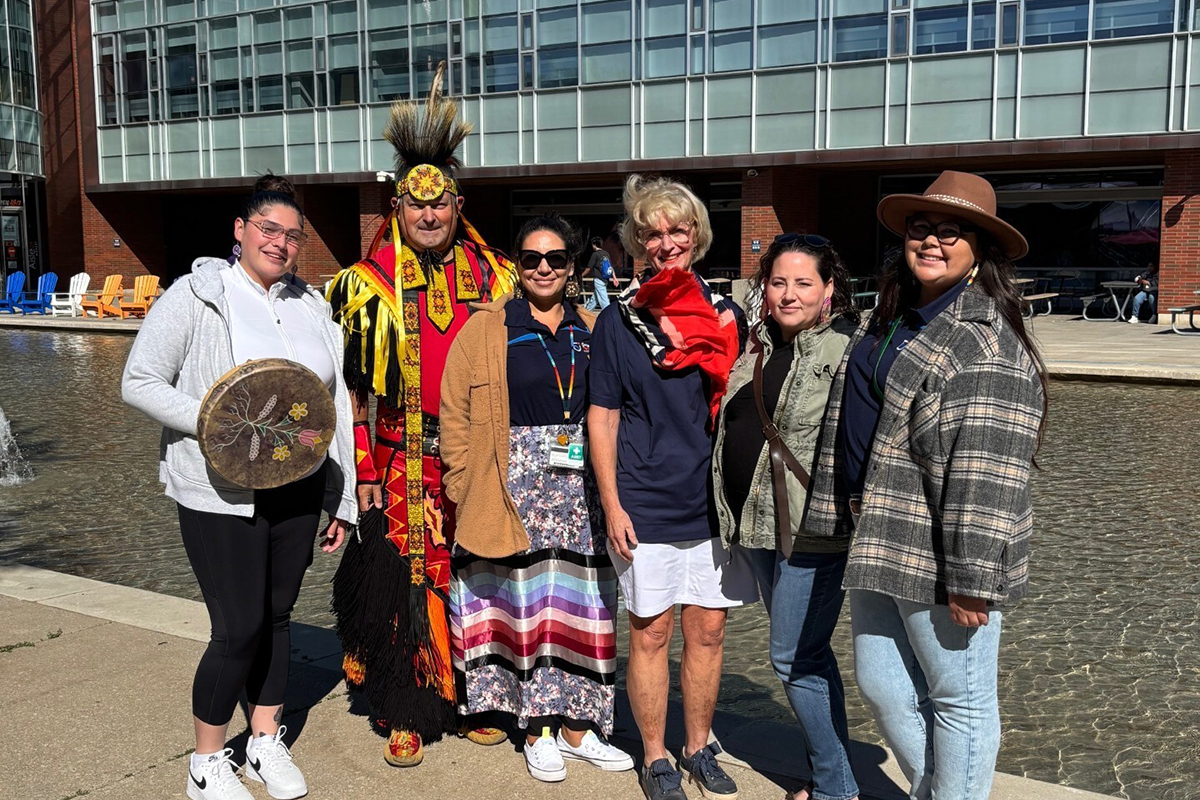
A Year of Growth, Connection, and Momentum for Indigenous Education and Cultural Services
Graduate Research celebrated at annual art and poster showcases

Ontario Tech recognized for sustainability leadership